
How Mechanics Diagnose a Check Engine Light: Inside the OBD-II Scan Process
Introduction: When Technology Meets Expertise
When your check engine light comes on, your vehicle is trying to talk to you — in a coded language. Behind that little amber symbol lies a computer system monitoring dozens of sensors and components.
At Kwik Lube & Services in Killeen, TX, our ASE-certified technicians speak that language fluently. We don’t just “read the code.” We interpret it, confirm it, and pinpoint the real cause of the problem.
In this article, we’ll walk you through how professional mechanics diagnose a check engine light from start to finish — using modern OBD-II technology, critical thinking, and years of experience.
1. The Science Behind the Check Engine Light
Every modern vehicle has an On-Board Diagnostics System (OBD-II) that monitors your engine, transmission, exhaust, and fuel systems.
When a sensor detects readings outside of the expected range — say, an oxygen sensor showing too little oxygen — the car’s computer (ECU) saves a Diagnostic Trouble Code (DTC) and triggers the warning light.
This process helps technicians trace problems precisely rather than guessing. The challenge is that one code can have multiple possible causes, so deeper testing is essential.
2. Step One: Connecting the OBD-II Scanner
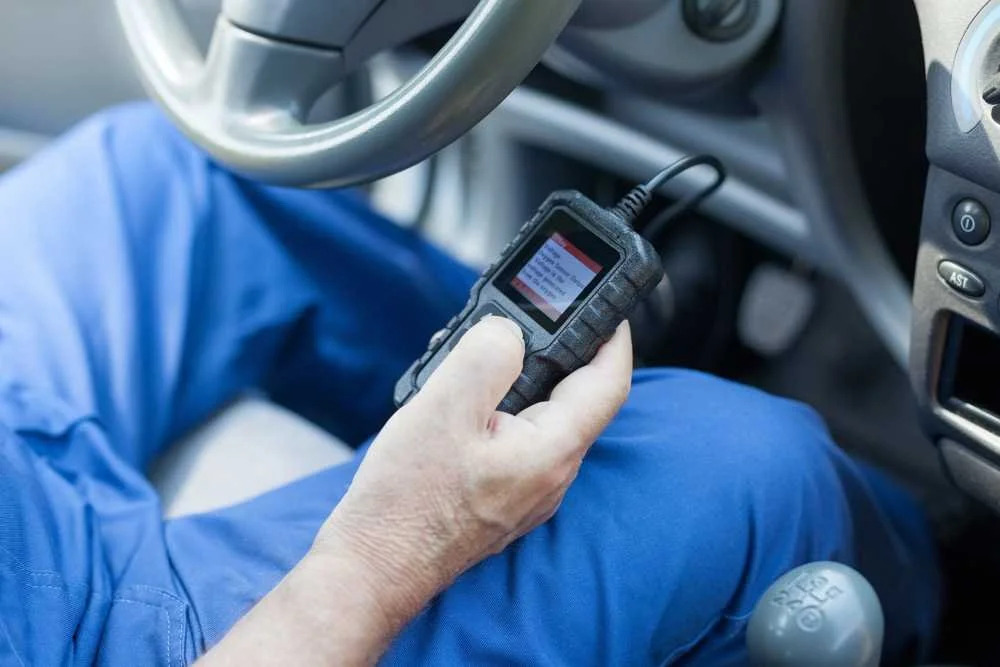
The diagnostic process begins by plugging a scanner into the OBD-II port, usually located beneath the dashboard on the driver’s side.
There are two main types of tools:
Basic Code Readers: These handheld devices retrieve stored codes but provide limited data.
Professional Scanners: Used by our technicians, these read not only codes but also live sensor data, freeze-frame information, and manufacturer-specific systems.
At Kwik Lube & Services, our scanners pull comprehensive data so we can see what the computer saw when the problem occurred.
3. Step Two: Reading Diagnostic Trouble Codes (DTCs)
Each DTC begins with a letter and four numbers — for example, P0301 (Cylinder 1 Misfire).
Here’s what those characters mean:
P = Powertrain (engine or transmission)
B = Body (airbags, climate control, etc.)
C = Chassis (brakes, steering)
U = Network or communication issue
The next digits specify the exact problem. Some common codes include:
P0171: System Too Lean
P0420: Catalyst Efficiency Below Threshold
P0440–P0456: EVAP System Leak
A code points us in the right direction, but it’s not the entire story — that’s where deeper data comes in.
4. Step Three: Reviewing Freeze-Frame Data
When a fault is detected, the ECU takes a “snapshot” of the vehicle’s operating conditions at that moment:
engine RPM, coolant temperature, throttle position, load, and more.
By analyzing this freeze-frame data, mechanics can determine the exact situation when the issue occurred — for instance, “The O₂ sensor fault happened at 2,800 RPM during highway acceleration.”
That context often reveals whether the problem is electrical, mechanical, or environmental.
5. Step Four: Analyzing Live Sensor Data
The next step involves watching real-time data streams from sensors while the engine is running.
Technicians monitor:
Oxygen sensors (fuel mixture)
Mass airflow sensor readings
Short- and long-term fuel trims
Coolant temperature and thermostat behavior
Ignition timing and RPM
Patterns in these numbers tell us how systems interact. For example, a lean fuel trim plus a high airflow reading could mean a vacuum leak, not a bad sensor.
6. Step Five: Visual and Physical Inspection
Technology narrows the search, but it doesn’t replace hands-on inspection.
Once a probable cause is identified, we verify it physically:
Inspecting hoses and wiring for cracks or corrosion
Checking connectors and grounds
Testing components like spark plugs, coils, and sensors
Listening for vacuum leaks or unusual noises
This combination of data and diagnostics ensures we fix the root issue rather than replacing parts unnecessarily.
7. Step Six: Verifying the Repair
After repairs are made, the fault code is cleared and the system is rechecked.
Mechanics then perform:
Test drives under similar conditions to those in the freeze-frame data
Re-scans to ensure no pending or new codes
System monitors reset (emissions readiness)
Only after confirming normal operation do we consider the job complete. This step ensures your check engine light stays off for good.
8. DIY Scanners vs. Professional Diagnostics
You can buy an inexpensive OBD-II reader online, and it’s great for curiosity — but it only tells part of the story.
DIY scanners:
Display basic codes but not live data
Don’t access manufacturer-specific systems
Can’t confirm whether a repair worked
Professional diagnostics at Kwik Lube & Services:
Provide full data streams, freeze-frame info, and live tests
Detect multiple systems simultaneously
Include technician interpretation and verification
A $20 scanner can tell you what happened. A trained mechanic explains why — and fixes it correctly the first time.
9. The Human Element: Experience Still Matters
Two cars can trigger the same code for entirely different reasons. That’s where technician experience makes all the difference.
At Kwik Lube & Services, our ASE-certified team has seen thousands of check engine cases — from simple gas-cap leaks to rare electrical faults. We recognize patterns, test hypotheses, and confirm results before recommending repairs.
That’s the combination of technology and intuition that prevents wasted time and money.
10. The Killeen Advantage: Why Local Expertise Counts
Local conditions matter. In Killeen’s hot, dusty climate, sensors and gaskets degrade faster, especially under stop-and-go or military-base driving conditions.
Our technicians tailor every diagnostic to Texas driving realities — checking cooling systems, air filters, and vacuum lines more closely than shops in milder climates.
We also keep common parts in stock, so you can get your diagnostics and repairs done the same day whenever possible.
11. Why Timely Diagnostics Protect Your Engine
Delaying a scan allows small issues to multiply. A simple misfire today can clog your catalytic converter tomorrow.
Prompt diagnostics:
Prevent further component damage
Improve fuel economy
Reduce emissions
Ensure your car passes inspection
Give peace of mind on long drives
When the light comes on, the smartest move is to visit your trusted auto repair shop in Killeen right away.
Frequently Asked Questions
Q1: What does OBD-II stand for?
A: It means “On-Board Diagnostics, version 2,” a universal system that monitors your car’s performance and emissions.
Q2: Can I diagnose my own check engine light with a phone app?
A: You can read basic codes, but apps can’t verify causes or check live data accurately. Professional testing is far more reliable.
Q3: How long does a professional diagnostic take?
A: Most scans take 30–45 minutes. More complex electrical or sensor issues may take longer to test and verify.
Q4: Will the code go away after the repair?
A: Yes. Once the fault is fixed and the system passes its self-tests, the light will turn off automatically after several drive cycles.